Drone detection
Spot FPV drones and their pilots' remote controls by their radio links, without emitting anything.
Small first-person-view (FPV) drones are cheap, fast, and hard to see or hear in time. But almost all of them depend on two radio links: the pilot's remote control, and the video sent back to the pilot's goggles. Both leave a trace. Today, our sensors pick up 2.4 GHz ExpressLRS control links and analog video.
What our sensors detect
-
Remote controls
2.4 GHz links using ExpressLRS, the open-source control protocol most used on FPV drones. The sensor separates the two ends of each link: the transmitter in the pilot's hands, on the ground, and the receiver on board the drone. It counts how many of each are present.
-
Video links
Analog FPV video in the 1.2 to 5.8 GHz bands. The sensor locks onto the transmitter and rebuilds the picture: you see what the drone sees.
Support for digital video systems is in development.
From detection to your command post
- Several sensors watch the same area and confirm each other's detections.
- One alert can cue the others. A sensor that spots activity can direct other sensors to confirm it and recover the video.
- One continuous video stream for your C2, with standard MISB KLV metadata.
- The full chain has been demonstrated, from the sensors to a third-party C2 display.
Where it helps
Detecting drone incursions around a base, an airfield, a critical site or a public event.
Coming next
- Locating drones and pilots: in development.
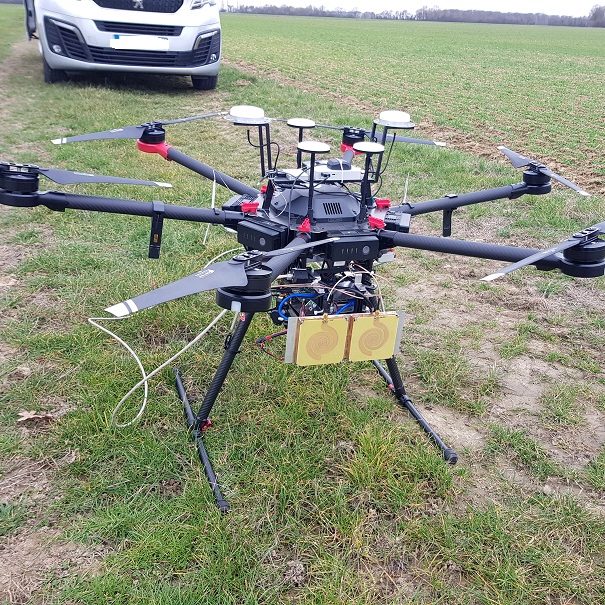
- An airborne sensor: a lightweight radio payload carried by a drone, to watch a wider area from above. This work is part of SPECTRA, a France 2030 project.
Export control
Some products, software, technical data, training and services are subject to French regulations and to French and EU export control. Contact us to discuss your needs: we handle the licensing process with the French authorities.
Facing a drone threat?
Tell us about the site and the drones you expect. We will tell you what our sensors can detect today.